

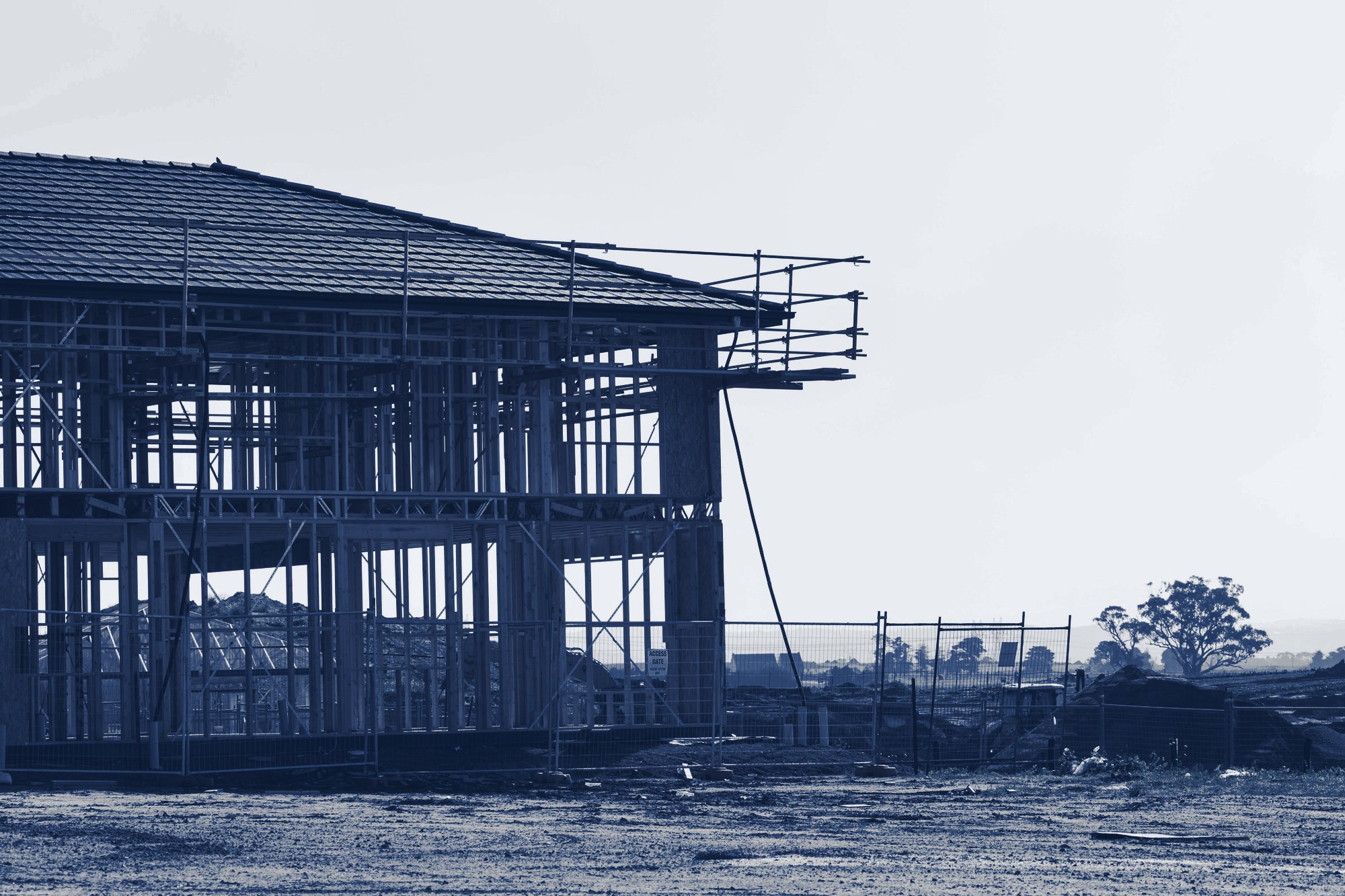
Building a home involves dozens of trades, hundreds of materials, and a long series of steps that depend on one another. Foundations must cure before framing. Framing must pass inspection before walls are closed. Cabinets cannot be installed until drywall is finished and painted. A delay at any point can ripple through every step that follows.
Cotra Cornerstone develops single-family homes, and managing that sequence well is central to the work. A reliable schedule protects quality, controls cost, and lets us give buyers honest information about when their home will be ready. An unreliable one creates pressure to rush, and rushing is how mistakes are made.
This article describes how our teams plan and manage construction schedules, how inspections and quality checks fit into the process, and how we keep buyers informed along the way.
The principle behind all of it is simple. Schedule and quality are not competing goals to be traded against each other. A well-planned schedule is one of the main ways quality is protected, and a commitment to quality is what makes a schedule worth keeping.
Planning before ground is broken
A good schedule starts before construction begins. Plans and specifications should be complete, permits in hand, materials selected, and trade partners lined up. Each unanswered question at the start becomes a potential delay later.
We build schedules from the actual sequence of work rather than from a target completion date. Each phase has a realistic duration, dependencies are identified, and lead times for materials are accounted for. Where certain items take longer to arrive, such as windows, cabinets, or some mechanical equipment, we order them early enough that they are on site when the home is ready for them.
“We build schedules from the actual sequence of work rather than from a target completion date.”
We also plan for the things that commonly disrupt construction. Weather, inspection timing, material shortages, and labor availability all affect the schedule. A sound plan includes reasonable allowances for them, so that a normal setback does not throw the entire project off course.
Where we build several homes at once, the schedule covers the whole group as well as each home. Starting homes in a steady rhythm, rather than all at once, lets trade crews move from one house to the next without long gaps or impossible overlaps. That rhythm is one of the most useful tools a builder has for keeping quality consistent across a street.
Sequencing the trades
A typical single-family home moves through a familiar order: site work and foundation, framing, roofing and exterior, rough-in for plumbing, electrical, and mechanical systems, insulation, drywall, interior finishes, and final work on the exterior and site. Within that order, many tasks overlap, and managing the handoffs between trades is where most schedules are won or lost.
Our construction managers coordinate those handoffs closely. Before one trade finishes, the next should know when to arrive and what condition the home will be in. A trade that shows up to find the previous work incomplete loses a day, and so does the schedule. Clear communication, confirmed in advance, prevents much of that waste.
We value long-term relationships with reliable trade partners. Crews who know our plans, our standards, and our expectations work more efficiently and with fewer errors. We try to be a builder trade partners want to work with: clear scopes, organized job sites, homes that are ready when we say they will be, and payment on the terms agreed.
Job site conditions matter to every trade. A clean, organized site is safer, makes materials easier to find, and reduces damage to work already completed. Our teams keep sites orderly, protect installed materials from weather and traffic, and expect trade partners to leave each home in a condition the next crew can work in.
Inspections as checkpoints
Local building inspections are required at defined stages, typically including foundation, framing, rough-in of systems, insulation, and final completion. We treat these inspections as checkpoints that confirm the home is being built correctly, not as obstacles to be cleared.
Inspection timing must be built into the schedule. We request inspections promptly, make sure the home is genuinely ready before an inspector arrives, and address any corrections quickly. A failed inspection costs time and can hold up the trades waiting behind it.
Some inspections are especially important because of what they cover up. Once insulation and drywall are installed, the framing, wiring, plumbing, and ductwork behind them are difficult to see or reach. That is why we want these stages reviewed carefully before the walls are closed.
We keep records of every inspection, including any corrections required and how they were resolved. Those records are useful long after construction ends. They support warranty service, help answer homeowner questions, and show us where recurring issues may point to a change in our plans, specifications, or trade instructions.
Our own quality checks
Required inspections set a minimum. Our own quality reviews go further. At key stages, our construction teams walk each home with a checklist covering the details that matter for durability and livability: framing alignment, window and door installation, flashing and water management, mechanical installation, insulation coverage, and finish quality.
Water management receives particular attention. Proper flashing around windows, doors, and roof penetrations, correct installation of weather barriers, and grading that moves water away from the foundation are among the most important protections a home can have. Mistakes here may not show up for years, and they can be expensive to fix.
Issues found during these reviews are documented, assigned, and tracked until they are resolved. Before a home is offered for final walkthrough, it should be complete, clean, and working, with nothing left for the buyer to discover.
“Issues found during these reviews are documented, assigned, and tracked until they are resolved.”
Holding schedule and quality together
There is a natural tension between moving quickly and building carefully. Our approach is to resolve that tension through planning rather than through pressure. When the schedule is realistic and the sequence is managed well, there is less temptation to skip a step or cover up an unfinished detail.
When a delay does occur, we address it directly. We identify the cause, adjust the sequence where possible, and update the schedule honestly. We do not recover lost time by shortening cure times, skipping quality checks, or asking trades to work around incomplete conditions.
Progress, budget, and schedule are reviewed regularly. Capital spend is tracked against budget each month, consistent with the reporting every Cotra property follows, and significant changes to cost or timing are raised with leadership and, where appropriate, the investment committee.
Change orders deserve the same discipline. Every change to plans or specifications during construction, whether requested by a buyer or required by field conditions, can affect cost, schedule, and the work of several trades. We document each change, confirm its effect before it is approved, and communicate it to everyone affected, so that a small adjustment does not become a source of confusion or error.
Keeping buyers informed
For buyers, the schedule is personal. They may be coordinating the end of a lease, a move from another area, or the start of a school year. Reliable information about timing helps them plan, and changes communicated early are far easier to manage than changes discovered late.
We aim to give buyers regular updates at meaningful milestones, such as the start of construction, the completion of framing, and the approach of final finishes. Where the process allows, we offer opportunities to see the home under construction, including a review before drywall so buyers can understand what is inside their walls.
When timing changes, buyers should hear it from us, with an explanation and a revised estimate. We would rather give a careful estimate and meet it than give an optimistic one and miss it. The same plain, fair communication applies to every buyer, consistent with our fair housing commitments.
Finishing well
A well-managed schedule ends with a home that is complete, inspected, and ready on the date the buyer was told, and a buyer who understands how it works. That outcome depends on hundreds of small decisions made correctly and in the right order.
A home built in the right order is a home built to last.
This article is for general information only. It is not investment, legal or tax advice, and it is not an offer to sell or a solicitation of an offer to buy any security. See Important information.